
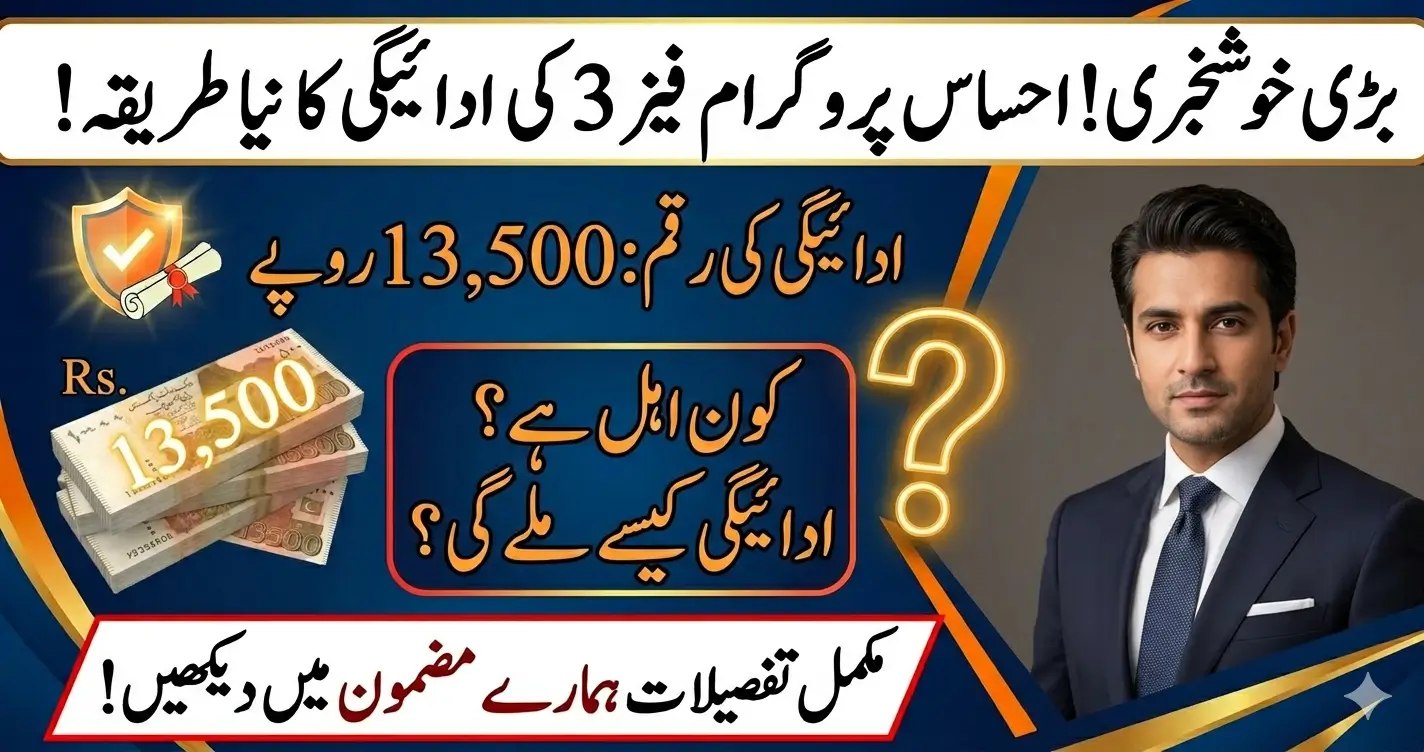
The 8171 Ehsaas Program Phase 3 payments is a major government financial support initiative for low‑income families in Pakistan. This article explains everything you need to know about this program. You will learn how the Phase 3 payments work, who is eligible, how to check your payment status, and where you can collect your cash. It is written in simple words that anyone can understand.
| Feature | Information |
|---|---|
| Program Name | 8171 Ehsaas Program Phase 3 |
| Payment Amount | Rs. 13,500 per eligible household |
| Eligibility Criteria | Registered in NSER, valid CNIC, low-income, not a government employee |
| Payment Status Check | SMS 8171 with CNIC, Online portal, Visit BISP office |
| Collection Points | BISP Payment Centers, HBL Konnect Shops, Partner Banks & ATMs |
| Common Issues | No record found, Biometric errors, Pending payments |
| Tips for Smooth Process | Use official SMS/portal, Keep CNIC updated, Avoid paying anyone |
What Is the 8171 Ehsaas Program Phase 3 Payments
The 8171 Ehsaas Program is a cash support scheme run under the Benazir Income Support Programme (BISP). The aim of this program is to help poor and deserving families meet basic living costs. Phase 3 is the latest stage of payments. In this round, eligible households receive Rs. 13,500 in support from the government.
This phase focuses on families who missed earlier payments or had issues during registration and verification. It helps them receive the financial relief they are entitled to.
Why This Payment Matters
Many families in Pakistan struggle with rising living costs. The 8171 Ehsaas Program Phase 3 payments provide important relief. The money can help cover food, bills, school expenses, medicine, and transport costs. For many households, this support is essential for daily survival.
Who Can Get 8171 Ehsaas Program Phase 3 Payments
Not everyone can receive these funds. The government sets specific eligibility rules to ensure only genuine low‑income families benefit. Below are the main points that decide eligibility:
Registered with BISP or Ehsaas
Your family must be in the government’s National Socio‑Economic Registry (NSER) database. This database lists families that are low income or living below the poverty line. Only households in this list can receive payments.
Have a Valid CNIC
You must have a valid Computerized National Identity Card (CNIC). This CNIC is used to verify your identity and confirm eligibility. Without it, you cannot check your payment status or receive money.
Meet Poverty Criteria
The government checks your household income, assets, and living situation to ensure you are truly in need. This helps keep the program fair and focused on deserving families.
Not Be a Government Employee
Families with government jobs or high income are generally not eligible. The support is meant for those with limited income or no regular earnings.
Also Read: Benazir Kafaalat Payment Increased to Rs 14,500 for Already Registered Women
How Much Money You Get
Under Phase 3 of the 8171 Ehsaas Program, eligible families receive a one‑time payment of Rs. 13,500. This amount is sent to families who satisfy all eligibility rules. The goal is to help with essential needs and reduce hardship.
How to Check Your Payment Status
It is very important to check if you are eligible and whether your payment has been approved. The government offers easy ways to check this:
Check by SMS
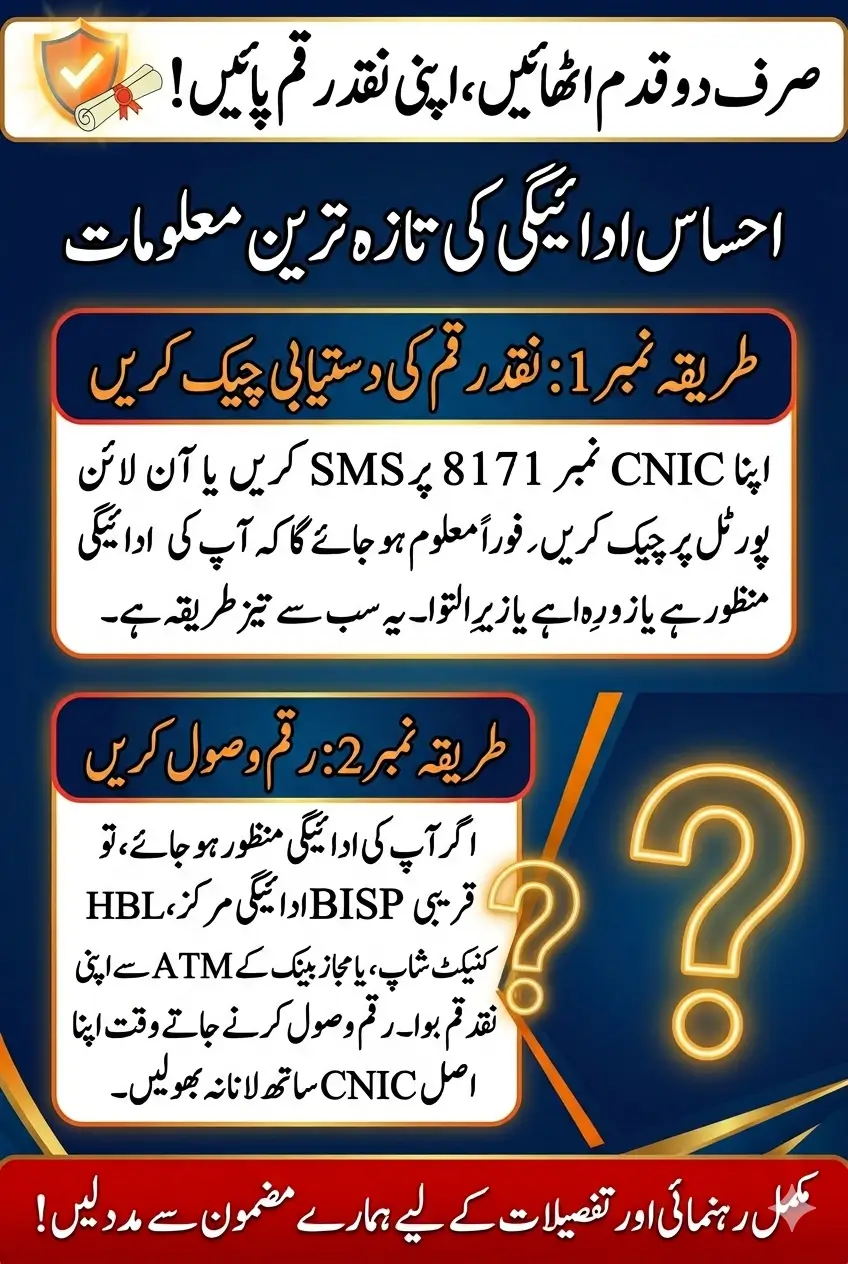
You can send your 13‑digit CNIC number to 8171 via SMS. You will receive a message telling you if the payment is approved, pending, or not available. This is the quickest way for most people.
Check Online
Another way is to visit the official 8171 web portal. There you can enter your CNIC and check your payment status online. This is useful if you want full details.
Visit a BISP Office
If your payment status shows no record or you cannot check online or via SMS, visit your nearest BISP or Ehsaas office. Staff can help verify your data and explain any issues.
Also Read: Benazir Kafaalat Payment Increased to Rs 14,500 for Already Registered Women
Where to Collect the Money
Once your payment is approved, you can collect it in several places. These include:
- BISP Payment Centers where staff handle cash distribution.
- HBL Konnect Shops for easy cash withdrawal.
- Authorized ATMs and partner banks that support the program.
When you go to collect your payment, bring your original CNIC and any SMS confirmation message you received. Staff may also use biometric verification to confirm your identity.
Common Problems and Solutions
Sometimes people face issues with the 8171 Ehsaas Program Phase 3 payments. Here are common problems and what to do:
No Record Found
If the system says you are not registered, check your NSER status. If your data is missing or outdated, visit a BISP registration center to update it.
Biometric Errors
Errors can happen during thumb verification. If your biometric data failed before, try again at a payment center. Staff can assist you.
Pending Payments
Some households may have pending payments due to late verification or system delays. Keep checking your status by SMS or online portal until it updates.
Tips to Make the Process Easier
Here are some tips to ensure your payment goes smoothly:
- Always use the official 8171 SMS and web services for status checks.
- Do not pay anyone for registration or payment updates. The program services are free.
- Keep your CNIC details updated with NADRA and BISP.
Why This Program Helps Families
The 8171 Ehsaas Program Phase 3 payments provide crucial support for many Pakistani families. Rising inflation makes daily life hard for low income households. This payment can bring real relief for food, medicine, school, and transport. It acts as a safety net for those who struggle the most.
The program also shows how digital systems can help reach people quickly and fairly. Using SMS and online portals allows families to check their status without long waits.
Final Thoughts
The 8171 Ehsaas Program Phase 3 payments offer vital financial support to eligible families in Pakistan. By checking your eligibility status, knowing how to collect your payment, and understanding the rules, you can make sure you receive the support you are entitled to. This assistance can make a real difference for households facing financial hardship.